

Maybe you have spilled your old fountain pen’s ink on your favorite plastic item, or your child has drawn it all over the plastic table with a permanent marker.
Whatever the case, it’s good to know how to remove those dark blue or black ink stains from plastic so that you do not end up permanently ruining your item.
Fortunately, you can try a few excellent ways, depending on the type of ink and the severity of the stain.
Rubbing Alcohol to Remove Ink
One of the best ways to remove ink from plastic is with a product called “rubbing alcohol.” Yes, I am talking about the same standard isopropyl alcohol in most stores that sell medical supplies.
Start by soaking a piece of rag or cotton ball in a cup of rubbing alcohol and then dabbing it onto the stain. If the ink stain is still fresh, not strong or permanent, you should see it starting to come off onto the cotton ball.
However, if it’s a spot of permanent ink, you must take it up a notch and get something more powerful, depending on the type of plastic you are dealing with. You will also need to be a little more forceful for more persistent ink stains.
So, further, in this blog post, I will go over some different ways to remove ink stains from soft and hard plastic surfaces. Maybe one or the other of these methods will help you out.

How to Get Stubborn Pen Ink Off Plastic?
Today’s most widely used inks include dye-based, pigment-based, and water-based formulations.
You’ll also find UV-cured, solvent-based, and plastisol inks—especially in packaging and screen-printing applications—because they offer strong adhesion and long-lasting durability.
Oil-based inks (such as those found in ballpoint pens, gel pens, and fountain pens) are another common category.
Depending on the ink type and how deeply it has stained the surface, the best method for removing more brutal pen ink from plastic can vary.
Because each ink type reacts differently, it’s essential to first identify both the plastic material and the ink itself. This helps you choose the safest and most effective solvent for the ink stain removal job.
Below are the most effective approaches based on the level and nature of the discoloration…
1- WD-40 Spray
For stubborn ink stains that don’t seem to be coming off quickly from plastic, try using a little bit of WD-40.
Just spray a small amount onto the indelible ink stain or lettering of the plastic containers and scrub it with a clean cloth until the ink comes off.
The good thing about WD-40 is that it can be used on almost everything, including plastic, rubber, wood, metals, etc. You can even put it on painted surfaces for a quick cleanup without harming the underlying paint.
You should, however, keep in mind that there are many types of plastic, and it is recommended that you do not use petroleum-based WD-40 on polycarbonate and clear polystyrene plastic.
Since these materials can be damaged by petroleum products, it’s important to double-check the type of plastic before cleaning it using WD-40.
2- Magic Eraser Sponges
Most magic eraser sponges are white in color and non-abrasive, resembling tiny bricks. Plus, they are readily available at your local grocery store – mainly in the cleaning department.
They are designed to remove the toughest stains and dirt from all types of surfaces without harming the material. You can even use it on American Girl Doll’s face to get the pen off, just in case your daughter tried to draw on her face and have a new look.
To use a magic eraser, get the sponge damp and scrub at the ink stain (in circular motions) until the stain disappears. Do not apply excessive pressure when scrubbing, as you might damage the plastic. Once you are done, wash the area with soapy water to remove any residue from the sponge.
This is a method that works fast in terms of results. However, you’ll need to be patient and let it work for about five to ten minutes before you start seeing any changes.
3- Hairspray
Did you know that hairspray can be used for more than just holding your hair in place? Yes, you can use this sticky substance to remove indelible ink stains from plastic surfaces and even clothes.
Hairspray contains alcohol as a solvent that helps break down the ink molecules, making them easier to remove.
To use hairspray on plastic, start by holding the can about 6 inches away from the stain. Then, evenly spray the stained area until it’s fully covered. Allow it to sit for a few minutes to give the alcohol time to work its magic.
After that, take a clean cloth and gently rub the stain in a circular motion. The ink should start to come off onto the fabric. If the stain is still there, you can repeat the process until it’s gone.
Just make sure to blot the area dry with a clean towel once you’re done to remove any leftover hairspray.
Warning: Hairsprays can be sticky and might be damaging for certain types of plastics. So, it’s recommended to test it on a small, hidden area before using it on the entire stain.

4- Baking Soda and Toothpaste
Mix baking soda and toothpaste in a 1:1 ratio to form a thick paste – it acts as a powerful all-purpose cleaner for hard plastic surfaces such as bins, containers, car interiors, etc.
Apply the freshly prepared paste to the ink stain and rub it with your fingers or an old toothbrush. Leave it for 5 minutes, and then rinse it off with water.
Remember to use non-abrasive white-colored toothpaste such as Colgate or Crest. Do not use any gel-type colored toothpaste, as it might leave another stain that can be challenging to remove.
Also, remember that since this method uses baking soda, it’s certainly not the ideal way to use it if you are working on painted plastic surfaces – it can remove the coating or damage the surface.
5- Warm, Soapy Water
This ink remover method is pretty safe and fast for ballpoint ink, stamp ink, or printer ink that is still fresh on surfaces like phone cases, laptop, toys, etc. You can even use it on painted surfaces without worries.
However, if you are trying to remove dried permanent markers from surfaces like plastic folders, this might not be very effective.
To use this method, mix a few drops of dishwashing soap in warm water. Then, blot the ink stain with a clean cloth soaked in soapy water.
Gently rub the stained areas in a circular motion until the ink starts to come off. Once the ink stain has gone, rinse the area with clean water and dry it with a towel. You can repeat the process if the stain is still there.

How to Get Off the Permanent Printed Ink from Plastic?
Got some pesky printed ink clinging to your plastic? Don’t worry—it’s not a lifelong commitment!
With the right tricks up your sleeve, you can effectively deal with stubborn and more permanent ink like the one from permanent marker, labels on your old containers, bags, sheets, or unwanted markings on hard plastic parts.
Here’s a foolproof method to make that permanent-looking ink disappear like magic, like it was never there…
Things You’ll Need:
- Nail polish remover
- Tissue paper
- A soft cloth
- A clean bowl (no fancy stuff, just a bowl)
The Ink-Be-Gone Method:
- Soak some tissue paper in nail polish remover.
- Slap that soaked tissue onto the printed ink, making sure the entire area is covered.
- Let it sit for about 10 minutes. Go grab a snack while the magic happens.
- Remove the tissue and rinse the area with clean water. Or wipe with a soft cloth dampened in water.
- Dry it off with a soft cotton cloth—because even plastic deserves a little pampering.
Still seeing traces of ink? Repeat the process until your plastic is as clean as a fresh start.
Tips and Precautions When Removing Ink Stains from Plastic
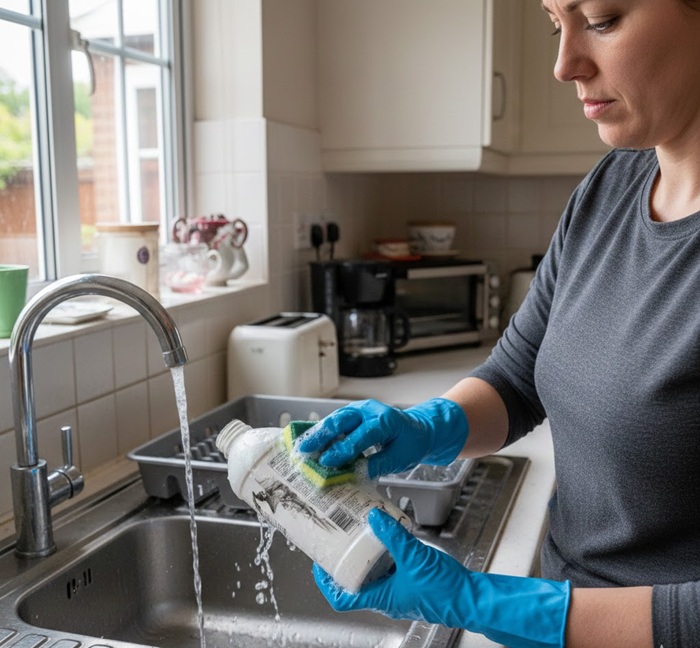
While all the products mentioned above are safe to use on plastics to remove pen marks, you still need to take some precautions.
White plastic is especially tricky—any small scratch, discoloration, or chemical reaction becomes instantly visible.
Whether you’re cleaning ink off white phone chargers, switch plates, remote controls, appliance housings, kitchen containers, PVC pipes, or white plastic chairs, it’s important to approach stain removal carefully to avoid permanent damage.
Here are the key precautions to keep in mind:
1- Wear gloves at all times – Most cleaning agents—whether rubbing alcohol, hand sanitizers, or specialized ink removers—can irritate your skin.
Gloves also prevent body oils from smudging the plastic surface while you clean.
2- Read the product label before applying anything to plastic – Some stain removers contain additives, perfumes, or dyes that might react with plastic and leave yellowish or dull spots.
Always double-check compatibility, especially when using products like WD-40, Goo Gone, or magic-eraser-type abrasives for biro stain removal.
3- Avoid strong chemicals like pure acetone or bleach on softer plastics – Plastic can warp, soften, or permanently discolor when exposed to harsh solvents.
Bleach can leave brownish patches or make the plastic brittle. Softer plastics—like polypropylene food containers, PVC products, or plastic-coated electronics—are particularly sensitive.
4- If you must use an acetone-based product, perform a spot test first – Acetone and nail polish remover do lift ink quickly, but they can also melt, cloud, or dull the surface.
Always test on a hidden area—like the underside of a white plastic chair, the back of a remote, or the inner rim of a PVC pipe cap—before applying it to the visible stain.
5- Don’t over-scrub white plastic – Abrasive pads, scouring powders, or even “magic sponge” melamine erasers can remove the shiny finish or create light scratches that look worse than the ink. Use gentle pressure and a soft cloth whenever possible.
6- Be cautious with heat – People often try using hot water or steam to loosen ink, but plastics can warp or develop uneven patches when exposed to excessive heat.
7- For valuable or structural items, call a professional – If you are working on an important or more significant project like removing ink from PVC pipes, electrical housings, appliance parts, or anything load-bearing or expensive, it’s better to let an expert handle the ink removal.
Professionals have access to controlled solvents and tools that clean without weakening or discoloring the plastic.
Related FAQs
Is methylated spirits ok to remove biro ink from plastic?
Yes, methylated spirits (denatured alcohol) is generally safe and effective for removing biro (ballpoint pen) ink from most plastics. It works similarly to isopropyl alcohol because it dissolves the ink’s dyes and oils.
You can use it by applying a small amount on a cloth or cotton pad, rubbing gently, then wiping with water and mild soap.
Keep in mind that methylated spirits can slightly dull very glossy plastic. So, avoid using too much pressure on soft plastics.
What is the best way to get rid of highlighter marks on plastic?
The best way to remove highlighter or whitener marks from plastic is to use isopropyl alcohol, which dissolves the ink quickly without damaging the surface. For white plastic, a magic eraser works great to lift stains and restore brightness.
You can also try a baking soda paste or white toothpaste for a gentler option. Always clean the area with mild soap afterward and avoid strong solvents like pure acetone.
Can hand sanitizer help me get computer ink off my plastic furniture at home?
Yes, hand sanitizer can remove computer (printer) ink from plastic furniture because it contains alcohol that dissolves ink pigments.
Apply a small amount on a cloth, gently rub the stained area, and you should see the ink lift off. Wipe the surface afterward with mild soap and water to remove residue.
For tougher stains, you may need to repeat the process or switch to stronger rubbing alcohol.
The Bottom Line
As you can see, there are many different ways to remove ink stains from plastic. Which method you use should depend on the type of ink you’re dealing with and the type of plastic you are working on.
Always start with the gentlest method and work your way up to the more harsh ones if necessary.
If the ink stain is still present after trying all the methods, it’s best to consult a professional, as you might end up damaging your expensive plastic surface if you continue trying to remove it.
Share the post "Removing Ink Stains From Plastic – 5 Different Ways to Try"


One of the greatest feelings in the world is finishing a project. Whether it be remodeling part of your house Read more

Old & Empty Paint Cans We see continuous development around the globe all the time. Due to this, you can Read more

Repainting your cabinets is a great way to give your kitchen a fresh, newer look. However, there is a deceptive Read more

Painting your home can be a great relaxation and fun for DIYers. Yes, it's wonderful - until you spill some Read more

Jack Luis is a semi-retired painter who loved painting his clients’ ideas on their walls.
He had worked as a painter for over a decade serving customers in areas such as Charleston, Mount Pleasant, Beaufort, and Georgetown, SC (South Carolina). Today in his free time, he likes to read and write about the newer techniques implemented in his profession. You may read more about him here or get in touch with him here.