

Chalk paint is a change of pace for most old painters like me. But it is also an opportunity for anyone to create a new, interesting look for their furniture.
Of the many painting jobs I’ve performed over my career, working with chalk was certainly one of the most interesting.
Chalk is not like most other paints, and the first time I used it was to paint over my kitchen table, chairs, and cabinetry. After applying the paint, I waxed to seal the paint, and the results were unusual, to say the least.
I’m not sure if the look of the finished table/chair or the look on my face was more surprising, but eventually, I fell in love with how the chalk paint makes certain items look unique.
But I also learned that wax is not the only sealant for chalk that keeps the paint from scratching. The key is finding the right type of sealant that keeps the chalk paint in place without distorting the color or appearance.
Why You Should Seal Chalk Paint?
The very first question, before you start, is to figure out why does chalk paint actually needs to be sealed.
Well, to cut a long story short, chalk paint is known for the antique-style look that it delivers when applied to wood furniture.
However, simply leaving the chalk-painted surface bare (with no topcoat sealer) will mean that the unfinished surface is not capable enough to withstanding day-to-day wear and tear.
So, in most cases, you will need to seal chalk paint to protect the color that is vulnerable to the elements, and natural distressing, while also ensuring that the paint lasts for years.
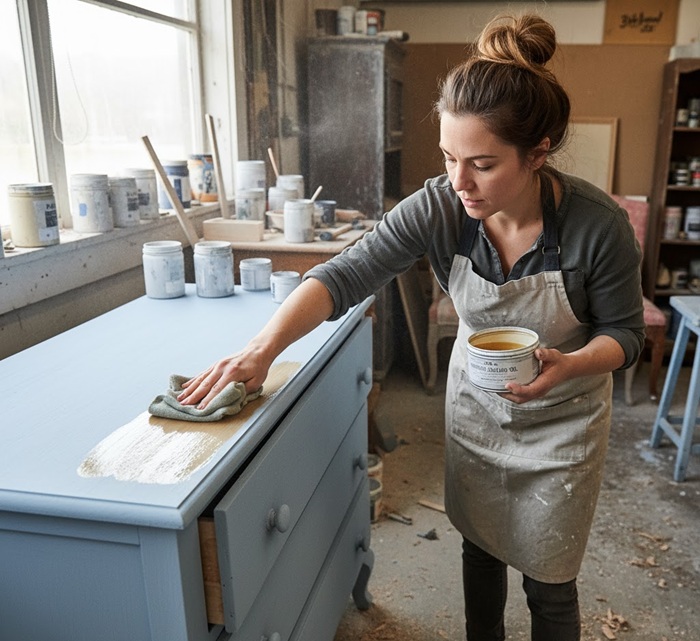
5 Sealants for Your Chalk Paint Project
Before I get into what sealants are the best and how to use them, I want to tell you about a method that helps bring out a soft sheen to the chalk paint without applying any product.
It is called buffing and while you might think that buffing paint would simply remove it, chalk paint will look good with a nice buff.
Buffing is simple to do, provides a nice sheen, and works well for items that will sit outdoors. The biggest advantage is that it will not change the color of your paint like most sealants do.
However, buffing does not last as long in protecting the paint as a good sealant. Plus, if you are using the item every day, then the sheen will quickly fade.
What follows are a few sealants for chalk that I’ve learned to apply over the years. Hopefully, these will help you find the right one for your furniture.
1- Glaze
The glaze is quite popular as a sealant, especially for chalk paint. It does seem to complement chalk quite well, particularly when you use it for indoor refinishing projects.
Advantages:
The glaze adds an interesting, unique touch to the paint. And you can choose from a wide variety of colors for your glaze. Plus, if you ever want to change the color, you can paint over it with confidence.
Glaze can be applied with a brush, but you can use an old cloth as well assuming it is clean.
Disadvantages:
The biggest downside is that glazing is not as durable as most other sealants.
Plus, the color of the glaze you use will affect the color of the chalk paint. If you do not want that, you might want to try another sealant.
2- Oil
Most people associate oil sealants with milk paint, not chalk paint.
However, the right type of oils can be used to seal chalk paint and they can prove to be the best sealers for your furniture.
Advantages:
If you want a sheen similar to wax without using wax, then choosing a good wood oil may be the way to go. Being easy to apply is a big plus for oil, as it can be applied with just a piece of rag.
Also, most oils contain fewer toxic properties compared to some other sealants.
Disadvantages:
Good luck in painting over an oil finish, as it can be problematic. Plus, you do not get the same smooth feel as a few other sealants, such as polyacrylic or wax.
One other bigger issue is that the oil will change the color of the chalk paint (it will be yellow over time), which is something you may not want.
3- Polyacrylic
Polyacrylic clear sealer is the water-based version as the oil-based ones tend to get yellow rather quickly.
For sealing the surface painted with chalk paint, you can choose either the liquid or spray forms of this sealant.
Advantages:
Polyacrylic is quite durable, can be applied quickly, and you can paint over it if you want with paints other than chalk. It takes less time to apply than most other sealants.
You can even tint the polyacrylic and use it over wood furniture, floors, decals, and much more. There is a wide variety of finish options from glossy to matte and many in between.
Disadvantages:
A minor issue arises when applying the polyacrylic with a brush, as you might see the brush strokes, but that can be avoided by using a sprayer or a spray can version.
The biggest issue is that you might need to apply a second or even third coat for full coverage. Plus, it will eventually yellow over time, even if it takes longer than the oil-based version.
4- Rustoleum Matte Finish
While this is a brand name and not necessarily a separate type of sealant, it does offer some attributes worth noting.
Advantages:
Probably the biggest plus is that the Rust-Oleum Specialty Matte Finish Spray is easy to apply. Just spray it on, make sure you cover all of the chalk paint, and you are done.
The finish you get is durable, and it leaves behind a sheen just like wax without having to strain yourself in applying the product.
Disadvantages:
It is durable, but not quite as much as polyacrylic. Also, if you want a shiny finish as opposed to a matte one, then this isn’t the product for you.
You may need to apply additional coats, although given the fast application time, this really isn’t an issue. But whether it yellows over time is a question I have yet to answer.
5- Clear Wax
When using wax as a chalky paint sealer, you should apply it evenly and in the right quantity. If you put too much wax unevenly, built-up wax can attract dust, and on hot days, it can melt to leave your furniture looking blotchy.
Conversely, if you put a very thin layer, it could allow water and moisture to penetrate slowly. So, I recommend applying 2-3 thin coats of wax evenly on the chalk paint on wood pieces that get a lot of use.
While I have already given the impression that wax is not the best sealer for homemade chalk paint, it is not without its attributes.
Advantages:
Wax is inexpensive due to its availability (like Kilz sealing wax, Briwax, or Annie Sloan wax), and it does provide a smooth feel to the surface.
The remarkable lustrous sheen you get is durable and water-resistant, which few sealants can match. Plus, you can paint over the wax if you ever want to experiment with other colors.
Disadvantages:
As I found out the hard way, it takes considerably more effort and time to fully apply the wax compared to most other sealants.
Also, you will need to touch up the wax over time, which means it requires more maintenance.
The finish you get is water-resistant, but the same cannot be said about the heat. You should generally avoid the wax sealant if you want to place your chalk-painted furniture outdoors in the sun.

Can You Leave Chalk Paint Unsealed?
Yes, if it’s a piece of furniture that is used rarely, you can leave it unsealed after applying the chalk paint.
As a general rule, chalk-painted furniture will only need a coat of sealant if it experiences too much daily wear and tear. If you leave such daily used furniture items unsealed, they become susceptible to getting scratches and paint chipping.
How long should chalk paint dry before sealing?
Before applying the sealant you must wait between 24 and 72 hours for chalk-painted furniture to dry completely.
The longer you wait for chalk paint to dry and cure, the more durable the surface will be after sealing (no matter whether you sealed it with oil, wax, or varnish).
Using Lacquer to Seal Chalk Painted Furniture
A few of my readers who spent a great time reading my post that discusses steps on restoring a mirror wood frame with chalk paint asked whether the chalk paint is waterproof or not, and whether it is OK to use it for outdoor furniture where water can get on it, make it wet, and create a problem?
To be frank, chalk paint isn’t waterproof and it’s not an ideal product for surfaces that are in contact with water round-the-clock. But that does not mean you cannot use chalk paint for outdoor furniture.
Since the chalk paint is water-resistant, you can apply it to your outdoor garden furniture and then seal it with Annie Sloan’s chalk paint lacquer.
Chalk Paint® Lacquer is a water-based polyacrylic varnish that can be applied directly over chalk-painted wood furniture for a hard-wearing, protected finish.
Since the product comes with built-in UV protection, it’s also perfect for getting a matte or a glossy finish on outdoor furniture.
Annie Sloan here discusses how easy it is to apply the lacquer using a sponge roller or a brush of your choice. If you want, you can check the video below to know more…
Please note that the lacquer and other sealers are water-resistant, but they are not waterproof. So, you should not expect it to last for long if the surface is immersed in water.
When we say waterproof and water-resistant, it’s not the same.
Surfaces, when made waterproof, do not get damaged by water very easily. But a water-resistant surface will only resist the water up to a certain degree and will help to protect the paint from getting ruined.
So, when using chalk paint and sealing the surface, it’s good to consider these important things…
- An indoor furniture piece that might get an occasional water spill does not need to be sealed mandatorily
- Outdoor furniture in your backyard or patio (that may get regular water showers) needs to be sealed with a lacquer or a sealer after the chalk paint has been cured
- If you are painting and sealing the vertical surface, where water will run off and does not pool, consider using varnish instead of lacquer.
Generally, lacquer over chalk paint is a great option for horizontal surfaces, surfaces that will be touched regularly, or surfaces with high foot traffic.
In rare cases, if you are chalk painting a surface that will need to be submerged in water (like a wooden toy in an aquarium), it should also be lacquered, varnished, or sealed with a proper sealer.
But you should avoid using wax on your outdoor furniture piece if it’s in direct exposure to the sun’s rays for long. The high heat can melt the wax fast.
When applying the lacquer sealant to your furniture ensure that:
- You plan your project during warm weather
- Seal the metal furniture properly if it has rusted before
- Apply at least two coats of lacquer evenly on the surface, including the underside.

Can Chalk Painted Furniture Be Sealed with Polyurethane?
IMO, water-based polyacrylic sealant works better than oil-based polyurethane as a sealer on chalky painted wood pieces.
Unlike polyurethane, polyacrylic is less tricky to apply and is much less likely to yellow over time. These top coats are also less smelly and are easy to clean with just warm water.
Mod Podge is also a good alternative to poly and wax sealers.
Particularly, it’s a decoupage medium that can be applied on top of a chalk-painted piece of furniture, craft, or art project made of glass or metal.
All these sealants for chalk paint are easily available at online stores like Amazon, Home Depot, Bunnings, and others for you to buy.
The Bottom Line
Whether it’s your kitchen cabinets, table, chair, hardwood floors, or other outdoor furniture, if you have applied chalk paint on them, it’s good to put a good sealer over it to preserve the color better and last longer.
Choosing the right sealer for your chalk paint means going over the five main sealants and finding the one that works best for your needs.
While clear wax is among the most popular, it’s also costlier and will require regular maintenance.
Clear chalk paint sealers (like oil, polyacrylic, polyurethane, and others), on the other hand, are known to be cheaper and more durable. These can, however, darken the color of your furniture a bit more than wax.
Share the post "5 Ways to Seal and Protect Your Chalk Painted Furniture"


Your basement is the perfect spot for building rooms you may not want in the main house. These may include Read more

Drywall is basically a panel composed of calcium sulfate dihydrate or gypsum. Other names include plasterboard, wallboard, sheetrock, gypsum board, Read more

Repainting the wooden window frames of your house is like putting on a nice, new summer dress after a long, Read more

While brushes and rollers are the traditional means of painting walls, spray paint is coming more in favor. For many Read more

Jack Luis is a semi-retired painter who loved painting his clients’ ideas on their walls.
He had worked as a painter for over a decade serving customers in areas such as Charleston, Mount Pleasant, Beaufort, and Georgetown, SC (South Carolina). Today in his free time, he likes to read and write about the newer techniques implemented in his profession. You may read more about him here or get in touch with him here.