

Painting wood sounds deceptively simple—dip the brush, roll it on, and admire the transformation. But when it comes to using regular wall paint on wood furniture, things get a little more complicated.
Wall paints are engineered for drywall, plaster, and masonry—not for the expansion, contraction, and wear that wood naturally goes through.
Still, many DIYers try it. Some succeed (at least initially), others end up with peeling, chipping, or a finish that looks great for three months and terrible by the next season.
In this guide, I’ll break down the science behind wall paint vs. wood paint, explore the pros and cons, and explain when it makes sense—and when it’s a mistake—to reach for that leftover can of emulsion.
Whether you’re refreshing wood cabinets, updating skirting boards, or experimenting with a weekend furniture makeover, this article will help you get it right the first time.
Can You Apply Wall Paint Over Wood?
Short answer: Yes, but not directly—and not without compromises.
Regular wall paint (typically emulsion or latex-based) can be applied to wood surfaces if the wood is properly prepared.
Bare wood is porous, flexible, and often contains natural oils or resins. Wall paint, on the other hand, is designed for stable, absorbent surfaces like drywall. When applied straight to wood, it tends to soak unevenly, dry brittle, and struggle to bond.
To make it work, the wood must be:
- Thoroughly sanded
- Properly cleaned and degreased
- Sealed with a high-quality primer
With the right wood primer, wall paint can adhere reasonably well to items like decorative panels, lightly used furniture, or interior trim that doesn’t experience much friction or moisture.
However, on high-traffic surfaces—such as wooden doors or frequently handled furniture—the finish is unlikely to last long without chipping or scratching.
In short, wall paint can be used on wood in controlled, low-stress situations. But it’s a workaround, not a best practice.
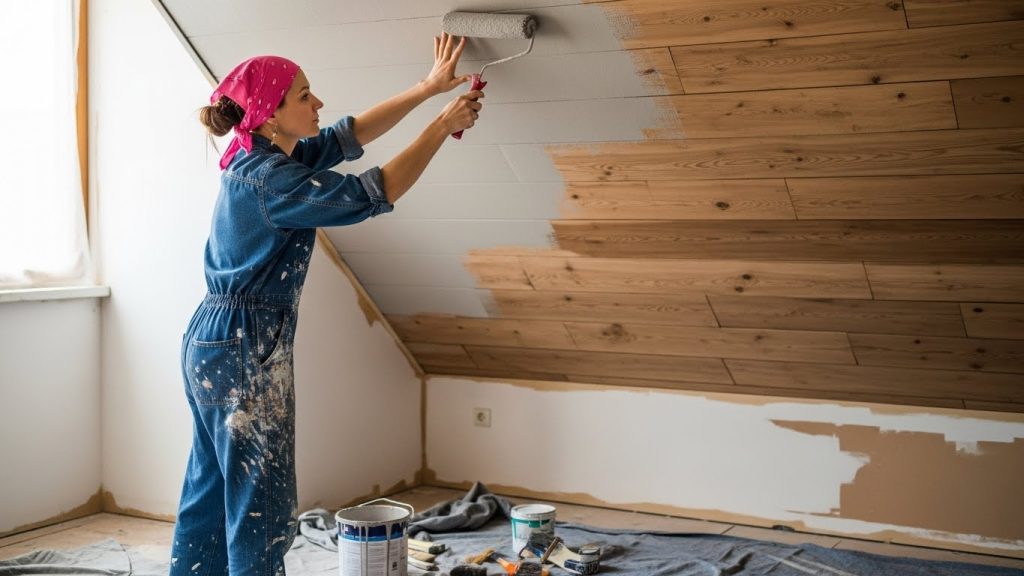
Difference Between Wood Paint and Wall Paint
The main difference between wood paint and wall paint lies in flexibility, durability, and formulation.
Wood paints are designed to move with the wood as it expands and contracts due to humidity and temperature changes. They contain flexible binders, stronger resins, and additives that resist cracking, peeling, and abrasion. Many also include moisture-resistant properties to protect wood from swelling or rot.
Wall paint, by contrast, prioritizes breathability, color uniformity, and ease of application on flat surfaces. It dries harder and more brittle, making it vulnerable when applied to a surface that moves—even slightly.
Another key difference is surface resistance. Wood paints are engineered to handle knocks, cleaning, and frequent contact. Wall paints are meant to look good, not take abuse.
That’s why professionals rarely recommend painting woodwork with emulsion unless the surface is decorative and lightly used. While wall paint may save money upfront, wood paint almost always performs better over time.
Wall Paint vs. Wood Paint Comparison
| Feature | Wall Paint | Wood Paint |
|---|---|---|
| Flexibility | Low | High |
| Adhesion to Wood | Poor without primer | Excellent |
| Durability | Low–Medium | High |
| Moisture Resistance | Limited | Strong |
| Best Use | Walls & ceilings | Furniture, trim, woodwork |
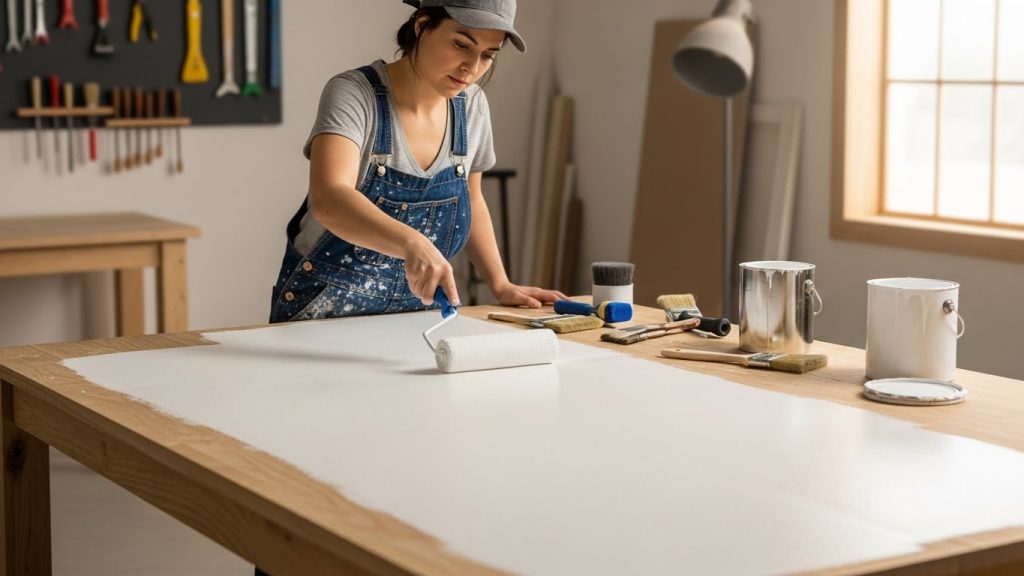
Pros and Cons of Using Regular Wall Paint on Wood Surfaces
Using wall paint on wood isn’t inherently wrong—it’s situational. Below is a clear, balanced breakdown of where it works and where it fails.
Pros
1. Cost-Effective for Small Projects – If you already have wall paint on hand, using it can reduce material costs—especially for quick DIY updates or temporary décor changes.
2. Wide Color Selection – Wall paints come in a vast range of colors and finishes, often more extensive than dedicated wood paints. This is appealing for creative projects or interior design experimentation.
3. Easy Application – Emulsion paints are generally low-odor, easy to clean up, and forgiving for beginners. They level well and dry relatively quickly.
4. Works for Low-Wear Areas – Decorative items, accent panels, or interior wood paneling that isn’t touched often can hold wall paint reasonably well—with proper priming.
Cons
1. Poor Adhesion Without Primer – Unprimed wood absorbs paint unevenly, leading to patchy color and weak bonding. Peeling is almost inevitable.
2. Low Durability – Wall paint isn’t designed to resist scuffs, impacts, or frequent cleaning. On wood furniture, this becomes obvious fast.
3. Cracking and Chipping Over Time – Wood moves. Wall paint doesn’t like that. Seasonal humidity changes can cause cracking or flaking.
4. Moisture Sensitivity – Wall paints perform poorly in humid environments. Using them near kitchens, bathrooms, or on wooden walls exposed to condensation is risky.
5. More Maintenance in the Long Run – What you save today may cost you more later in repainting, repairs, or complete stripping.
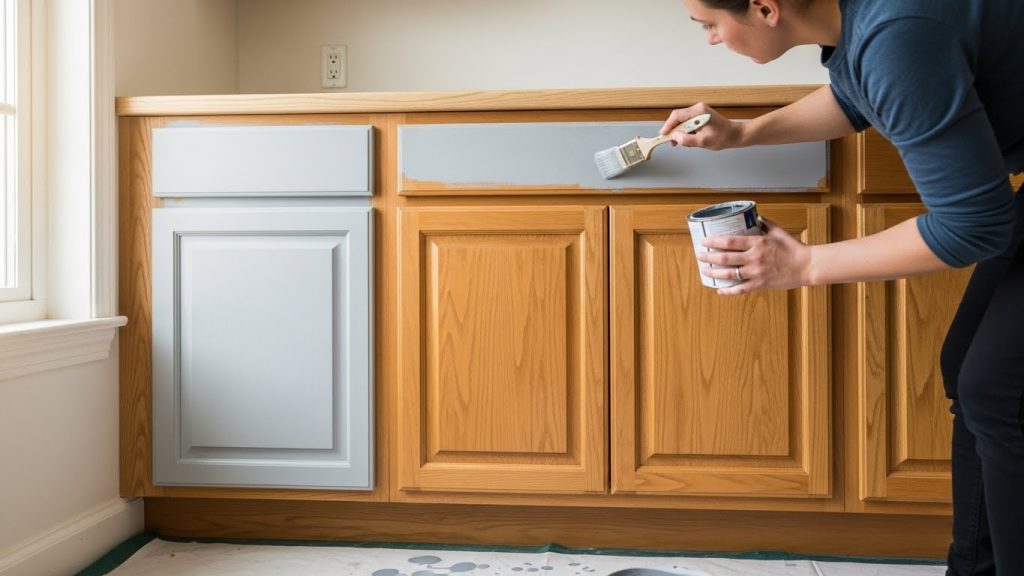
Important Things to Consider Before Applying Wall Paint to Wood
Before you decide to use wall or ceiling paint on wood, it’s important to understand that you’re asking a product to perform outside its original design.
The success of the finish depends far more on preparation, environment, and usage than on the paint itself.
Below are seven critical factors that determine whether your paint job lasts—or fails prematurely.
1. Natural Movement of Wood
Wood is a living material, even after it’s been cut and shaped. It expands and contracts with changes in humidity and temperature throughout the year.
Wall and ceiling paints are formulated for stable surfaces like drywall, which barely move once installed.
When applied to wood, these paints struggle to accommodate seasonal movement, leading to cracking, flaking, or micro-fractures in the film.
This issue becomes more pronounced on solid wood surfaces and larger panels where movement is more noticeable.
2. Surface Porosity and Absorption Rate
Bare wood absorbs paint unevenly due to variations in grain density, knots, and natural fibers.
Wall paint is not designed to regulate this absorption, which often results in blotchy finishes, dull patches, and excessive paint consumption.
Without proper sealing, the wood effectively “drinks” the paint, weakening the bond at the surface level. This is especially common when applying ceiling paint—typically thinner than standard wall paint—onto untreated timber.
3. Importance of Proper Priming
Primer is not optional when painting wood with wall paint—it’s essential.
A high-quality wood or multi-surface primer creates a stable intermediary layer that improves adhesion, blocks tannin bleed, and reduces moisture transfer.
Without it, natural resins and stains can migrate through the paint film, causing discoloration over time. Primer also allows wall paint to cure more evenly, improving both appearance and longevity.
4. Wear, Tear, and Contact Frequency
Consider how often the painted surface will be touched, cleaned, or bumped.
Wall paint is relatively soft once cured and lacks the abrasion resistance found in wood paints or enamels.
On surfaces such as shelving, trim, or frequently handled furniture, the paint can scuff, scratch, or wear through quickly. The higher the contact frequency, the shorter the lifespan of wall paint on wood.
5. Exposure to Moisture and Humidity
Wood and moisture are already a challenging combination, and wall paint offers limited protection against humidity.
In areas near kitchens, bathrooms, or poorly ventilated spaces, moisture can penetrate the paint film and reach the wood underneath.
This leads to swelling, bubbling, and eventual peeling. Ceiling paints are particularly vulnerable because they are engineered to be breathable rather than moisture-resistant.
6. Desired Finish and Cleanability
Wall paint typically dries to a matte or low-sheen finish, which looks great on walls but performs poorly on wood.
These finishes attract dirt, mark easily, and are difficult to clean without damaging the surface. If the wood needs to be wiped down regularly, wall paint may quickly lose its visual appeal.
This limitation often surprises DIYers who expect wall paint to behave like satin or semi-gloss wood coatings.
7. Long-Term Maintenance and Recoating Needs
Using wall paint on wood often means committing to more frequent maintenance. Chips and wear spots tend to appear unevenly, making touch-ups more noticeable.
Over time, repeated repainting without stripping can create thick, brittle layers that peel as a sheet. If long-term durability matters, it’s worth considering whether short-term convenience outweighs future refinishing work.
Related FAQs
Does wall paint work on wooden cabinets?
Wall paint can work on wooden cabinets only as a short-term solution. Cabinets experience frequent handling, cleaning, and minor impacts, which wall paint is not designed to withstand.
Even with thorough sanding and a high-adhesion primer, the finish tends to scuff and chip faster than wood-specific paints. For lightly used or decorative MDF cabinets, it may hold up temporarily, but for kitchens or storage cabinets, a durable wood or cabinet-grade paint is strongly recommended.
Is emulsion paint good for wooden garage doors?
Emulsion paint is generally a poor choice for wooden garage doors. Garage doors are exposed to temperature fluctuations, moisture, and physical wear—conditions emulsion paints are not formulated to handle.
The paint film can crack, peel, or fade quickly due to wood movement and weather exposure. Even interior-facing garage doors experience enough humidity and abrasion to cause premature failure. Exterior-grade wood paint or weather-resistant coatings provide far better protection and longevity.
Can wall and ceiling paint be sealed on a wooden surface?
Yes, wall and ceiling paint can be sealed on a wooden surface using a clear protective topcoat, such as polyurethane, lacquers or water-based varnish. Sealing improves abrasion resistance, reduces moisture penetration, and makes the surface easier to clean.
However, sealing does not make wall paint behave like true wood paint. While it extends lifespan, it cannot fully compensate for limited flexibility or durability, especially on high-use wooden surfaces.
The Bottom Line
So, can you actually use wall paint on wood?
Yes—but should you? That depends on where the wood is, how it’s used, and how much prep work you’re willing to do.
Using regular wall paint on wood isn’t a crime—but it’s a compromise. With excellent prep and realistic expectations, wall paint can work for decorative or low-wear projects. However, for longevity, durability, and professional-looking results, wood-specific paints are still the gold standard.
If your goal is a quick refresh or a temporary update, wall paint may serve you well. But if you’re investing time, effort, and pride into your project, using the right paint for the right surface is always worth it.
In painting, as in most DIY projects, the finish only looks as good as the foundation beneath it.
Share the post "Can You Use Regular Wall Paint on Wood Furniture?"


When you put up new drywall, it may seem that all you need to do is add two coats of Read more

Estimating the amount of paint you will need to paint your house is not rocket science. But it can be Read more

To dry appropriately, paint uses four components; Additives, Binder, Filler, and Solvent. The effectiveness of all four will depend on Read more

Painting your house is always a big deal, with lots of questions and decisions to work on. Though every house Read more

Jack Luis is a semi-retired painter who loved painting his clients’ ideas on their walls.
He had worked as a painter for over a decade serving customers in areas such as Charleston, Mount Pleasant, Beaufort, and Georgetown, SC (South Carolina). Today in his free time, he likes to read and write about the newer techniques implemented in his profession. You may read more about him here or get in touch with him here.