

At first, the thought of spray painting your artificial grass may seem out of the ordinary, to say the least.
However, the use of spray painting artificial synthetic grass has been a common technique in sports stadiums, golf courses, and movies for many decades.
Although your property may not be the setting for a major Hollywood production, you can use spray paint to brighten up the artificial grass on your turf or lawn.
Some of these spray paints also work best as a temporary solution for green lawn grass that has been damaged by drought. But be aware that you can only paint the grass green, which is still intact (not completely dead) but is discolored because of the weather, to enhance its curb appeal.
In times of drought when homeowners are faced with restrictions on the use of water, spray painting the lawn turf may be the quickest and easiest solution.
Spray Painting Artificial Turf
If your artificial turf has started to lose its vibrant green or looks faded in patches, spray painting it is one of the easiest and most cost-effective ways to restore that lush, fresh look.
The good thing about the grass painting is that it does not run off after the rain or after watering. Since it uses all-natural, non-toxic, and biodegradable true color pigments, these paints are also completely safe for your pets and kids.
Available in more than one color like white, red, blue, or yellow, you can use it to cover small pet urine spots or to make entire dormant or dead lawns look alive.
Step 1: Gather your supplies
For getting started with spray painting artificial turf, you’ll need one or two bottles of grass paint, depending on the turf you want to cover.
You will also need a garden sprayer. A single 16-oz bottle will cover roughly 300 square feet of lawn.
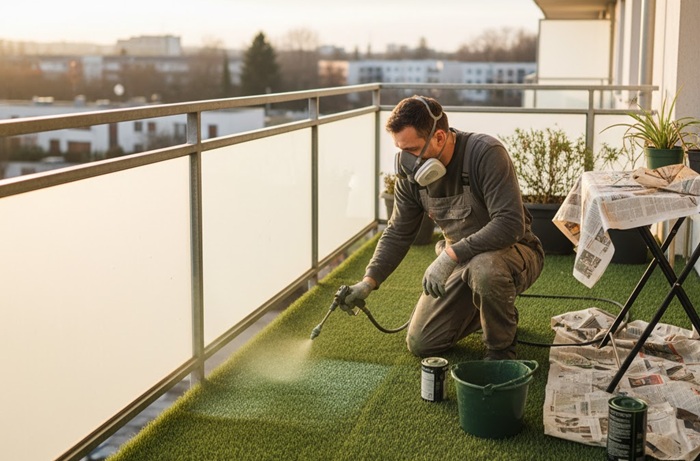
Make sure to also get protective gear like gloves, mask, goggles, and old clothing—since overspray can be hard to remove from fabric or skin.
Step 2: Prepare the surface and surrounding areas
Preparation is key to getting an even, professional result.
- Clean the turf: Remove any dirt, debris, or leaves using a stiff broom or leaf blower.
- Trim the grass and dry: If you’re spraying over a hybrid or mixed grass surface, mow it short and ensure the area is completely dry. Moisture can prevent the paint from adhering properly.
Also, before you start, cover nearby surfaces such as driveways, sidewalks, fences, garden mulch, or decorative stones with plastic sheeting or drop cloths. This helps prevent accidental paint stains and keeps your surroundings neat.
Step 3: Mix the paint and test
Follow the manufacturer’s instructions for mixing the paint/dye with water. Most grass-friendly paints are water-based acrylics, so they’re easy to dilute and clean up.
Adjust the ratio to achieve the shade you want; this means adding more water for a lighter color or less for a richer, deeper tone.
Next, set your garden sprayer to the fine mist setting and spray a small, inconspicuous area first. This lets you check the color, coverage, and spray pattern. If the shade appears too dark, dilute it slightly with water and test again.
Step 4: Start spraying your turf
Once you’re satisfied with the test area, begin spraying in circular or overlapping sweeping motions, keeping the nozzle about 8–12 inches from the turf to ensure even coverage.
Make sure you work slowly and methodically across the surface to avoid uneven patches. In case you happen to get any overspray, remove the paint cautiously using an ammonia-based window spray and a brush.
Step 5: Scale up for larger areas
Unless you have a huge lawn, it’s easy to apply the lawn paint using a hand sprayer that comes with a fine spray nozzle.
You can also use a spray marker if you have a pretty small area, like a balcony corner, patio patch, garden strip, or a decorative turf section near planters or walkways.
If you have a larger, plentiful lawn, a commercial landscape, artificial grass on a fence, or a football field to paint, you may need to get a pump sprayer system along with a professional who can help.

Best Paints to Use on Synthetic Turf
When recoloring or marking artificial grass, you should always choose a professional-grade synthetic turf paint specifically formulated for artificial surfaces.
These paints are designed to bond with synthetic fibers such as polyethylene, polypropylene, or nylon without clogging the infill, altering texture, or damaging the turf’s structure.
Remember, you can use the same process for painting the fake grass if you have one in your backyard garden, balcony, or porch.
It’s just that the paint you will need for artificial turf will be different. Here are some of the most recommended types of paints that can be used for synthetic turf:
1. Water-Based Acrylic (or Acrylic Latex) Paints
Non-toxic and eco-friendly, these paints adhere well to synthetic fibers and provide excellent flexibility, preventing cracks or peeling as the turf flexes.
You would need to dilute it and apply it evenly with a quality sprayer. They dry quickly and work well for both decorative designs and touch-ups.
2. Turf-Safe Synthetic Paints
Formulated exclusively for the plastic/synthetic fibers of artificial grass, these commercial turf pigments and colorants penetrate and bond to the fiber surface while resisting fading, flaking, and wear caused by UV exposure and foot traffic.
These turf safe spray paints are designed to match natural grass colors and can last for months while maintaining their vibrancy.
Major paint brands like Sherwin-Williams and others may offer synthetic turf paint options, but you should always ensure the specific product you choose is rated for use on plastic/synthetic materials and is non-toxic.
| Brand/Product Type | Key Features | Typical Availability |
| Endurant Turf Colorants (by Geoponics) | Professional Grade. Highly concentrated, long-lasting pigment. Comes in different shades (Premium, Fairway) to match natural grass. Best choice for longest-lasting, uniform coverage. Non-toxic and UV-resistant. | SiteOne Landscape Supply, Directly from Geoponics, and specialty lawn care distributor websites. |
| Lawnlift Grass Paint | Homeowner Favorite. Easy to use, often available in a smaller concentrate size or kit. Formulated for use on both natural and artificial turf. Great for smaller areas or general color enhancement. Non-toxic. | Amazon, Home Depot Online, and various other online retailers. |
| USSC Products (US Specialty Coatings) | Industrial Grade. Offers permanent options (PERMATURF). Designed for high-traffic, large applications like sports fields. Best for industrial-level durability or permanent line marking. | Directly from USSC and large industrial supply companies. |
| Pioneer Athletics Synthetic Turf Paint | Professional-grade paint (like Perma-Turf Green Paint) trusted by sports teams. Durable, non-toxic, and formulated for long-lasting color on synthetic surfaces. | Directly from Pioneer Athletics and athletic/field marking supply companies. |
| Valspar® Latex Field Marking Paint | A more accessible option, designed for marking lines on natural grass, clay, and synthetic turf. It’s a water-based, high-hiding latex paint. Crucially, it is often available in bulk green and white bases. | Independent Paint Retailers that carry Valspar and sometimes large agricultural supply centers. |
3. Chalk Paints – Removable Turf Paints
Ideal for temporary markings or events, these paints offer good durability but can be safely removed with turf cleaners or mild pressure washing.
You can safely use removable chalk paint on dry synthetic turf for short-term applications, but remember that it’s not a replacement for professional-grade turf paint when long-lasting color or durability is needed.
Chalk-based paints are often used for temporary markings—such as sports lines, event decorations, or promotional logos—because they can be easily washed or brushed off later.
Can You Use Oil-Based Paints on Artificial Turf?
Landscaping paint for artificial grass is an excellent way to revive and enhance the appearance of residential lawns, patios, and balconies, as well as in commercial settings such as restaurant terraces, office spaces, car parks, and event venues.
It’s also widely used to make playgrounds, pet areas, and athletic fields like soccer grounds and tennis courts greener—basically any indoor or outdoor spaces that require a durable, low-maintenance, and consistently green surface.
Oil-based paints might seem durable, but they’re not suitable for artificial grass and can cause several long-term issues:
1. Fiber Damage
Synthetic turf fibers are usually made from polyethylene, polypropylene, or nylon, all of which can react negatively to solvents found in oil-based paints.
These solvents can soften or weaken the fibers, leading to brittleness, discoloration, or melting over time. This compromises both the look and structural integrity of the turf.
2. Drainage Blockage
Artificial grass systems rely on a permeable backing layer that allows rainwater to drain through.
Oil-based paints form a non-porous film that clogs these drainage holes, preventing proper water flow.
This can cause water pooling, mold growth, and premature turf degradation, especially in outdoor installations.
3. Excess Heat Absorption
Oil-based coatings tend to have a glossy, non-reflective surface that traps and retains more heat from sunlight.
This can raise the surface temperature of the turf significantly—sometimes by 10–20°C higher than surrounding areas—making it uncomfortable to walk or play on and accelerating wear on the fibers.
4. Difficult Removal
Unlike water-based or turf-specific paints, oil-based coatings bond aggressively and are very difficult to remove without using harsh solvents, which can further damage the fibers or infill.

How Can You Remove the Paint from Artificial Grass?
It’s not much of a problem if you accidentally spill some paint on real natural grass while painting a lawn, as you can cut it down after it has grown out.
But if it’s an artificial turf you have overspray on (or worse if spilled a can filled with paint) that does not match with your synthetic turf color, it’s essential to remove it to avoid the dull stains and awkward patches.
Depending on the type of paint (latex-based or oil-based) you have used, you can either use soapy hot water or some chemical-based paint removers for cleaning up the artificial grass.
If the paint on the grass is already dry, you can also try removing it by using a paint scraper that can be easily purchased at your nearby home improvement store.
Make sure you do not apply too much pressure on the blades of artificial grass as it can make them break off from the lawn.
Related FAQs
How often can I paint my grass green?
You can repaint your dull synthetic grass every 2 to 3 months, as this is the typical longevity of a quality, non-toxic turf colorant.
If you plan to paint live grass in your lawn, the exact frequency depends on the grass’s growth rate and how often you mow. Since the paint adheres to the blade tips, frequent mowing will remove the color faster. Dormant brown grass that isn’t growing much will hold the color the longest.
Is it safe to use synthetic turf paint on live grass?
It is generally safe to use synthetic turf paint on live grass, provided the product is a water-based, non-toxic pigment formulated for turf.
These specialized products (like Lawnlift or Endurant) bond to the grass blades without inhibiting growth or causing harm. They are frequently used by golf courses and stadiums to color dormant, natural grass for aesthetics. Avoid using solvent-based or oil-based paints, as these can smother or kill the living grass.
Can you make a homemade dye for artificial turf grass?
While it is common for people to make DIY colorants and dyes for natural grass using ingredients like liquid fertilizer, Epsom salt, and green food coloring, this type of homemade dye is NOT recommended for synthetic artificial turf.
The materials in a natural grass DIY recipe (like fertilizer and Epsom salt) are designed to nourish living grass and likely will not adhere properly to plastic/synthetic fibers. Food coloring alone would likely wash off quickly or create a very patchy, unrealistic look.
The Bottom Line
Painted lawn grass and artificial turf look awesome as they give your place an evergreen, fresher feel with a deep green color.
Although you can hire a professional to do it, you can do the job yourself fairly easily if you choose the correct paint, have the right tools, and are patient.
This satisfying DIY project is not only fun but can save a good amount of money as well while enhancing your surroundings.
Share the post "How to Paint Artificial Turf? (Best Paints and Tips)"


When you put up new drywall, it may seem that all you need to do is add two coats of Read more

Estimating the amount of paint you will need to paint your house is not rocket science. But it can be Read more

To dry appropriately, paint uses four components; Additives, Binder, Filler, and Solvent. The effectiveness of all four will depend on Read more

Painting your house is always a big deal, with lots of questions and decisions to work on. Though every house Read more

Jack Luis is a semi-retired painter who loved painting his clients’ ideas on their walls.
He had worked as a painter for over a decade serving customers in areas such as Charleston, Mount Pleasant, Beaufort, and Georgetown, SC (South Carolina). Today in his free time, he likes to read and write about the newer techniques implemented in his profession. You may read more about him here or get in touch with him here.