

A fireplace can be quite comforting on those cold, winter nights.
But for those who want to create an even warmer atmosphere, it is recommended that your old, dull out firebox be painted to enhance the appearance of the flames.
While painting the inside of your fireplace itself is fairly straightforward, you will need to find a paint that is both non-toxic and heat-resistant.
This simply means that you need to use only a fireproof paint for the inside fireplace, as these specialized coatings are engineered for high-temperature environments to ensure safety and protect the surface from heat damage.
So, before you strike that match, let’s talk about the exact kind of paint designed to withstand the soaring heat in different types of fireboxes, how to use those coatings correctly, and which colors to choose for those cozy evenings ahead.
Best Paints for Inside Fireplace
For the inside of a fireplace, specialized high-temperature paints that can withstand extreme heat without cracking, peeling, or emitting harmful fumes work best. These coatings are typically rated to at least 1200°F (650°C).
Rust-Oleum Specialty High Heat Enamel Spray Paint is one of the best at providing premium results on durable cast iron or steel fireboxes, fireplaces, and stoves.
After spraying, it’s recommended to heat the surface to 300°F after drying to cure the paint.
Besides Rustoleum, brands like Sherwin-Williams, Krylon, and a few others also manufacture high-quality, high-heat spray paints that are also non-flammable.
However, before you plan to purchase one, you will need to identify the type of fireplace that you own to determine the exact type of paint that you will need for the firebox and mantelpieces.
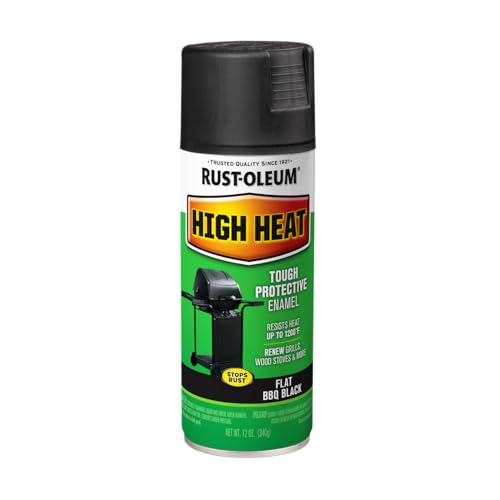
- Ideal for updating the exterior of barbeque grills, wood-burning...
- Oil-based formula designed to renew and protect metal surfaces subject...
- Covers up to 7-8 sq. ft. and dries to the touch in 30 minutes
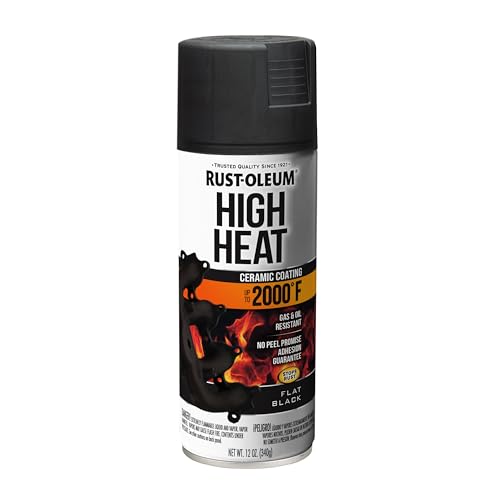
- Ideal for use on automotive parts and surfaces subject to intermittent...
- Tough enamel features Stops Rust formula to prevent corrosion and rust...
- Dries to touch in 30 minutes, covers up to 10 sq. ft. per can

- Ideal for refinishing exterior metal surfaces including refrigerators,...
- Epoxy formula creates an ultra hard, washable surface that withstands...
- Dries to the touch in 2-4 hours and covers approximately 7 sq. ft. per...
*Last update on 2026-03-30 / Affiliate links / Images from Amazon Product Advertising API
1. Paint for Brick Fireboxes
Brick-lined fireboxes are most common in U.S. homes because brick naturally tolerates extreme temperatures and doesn’t warp under thermal stress.
When painting bricks inside the fireplace, you need a non-flammable, high-heat coating that can cover stubborn soot and creosote stains while surviving temperatures up to 1,200°F.
Silicone-resin–based paints are ideal for these types of materials because they bond well and stay stable during repeated heating cycles.
Most homeowners stick with a flat black finish—partly for aesthetics and partly because it hides future smoke marks while making the flames appear brighter and more dramatic.
2. Paint for Metal Fireboxes
Metal-lined fireboxes are increasingly popular, but they require a bit more care because metal is slicker and less porous than brick, making adhesion tricky.
The safest and most reliable option here is stove paint, specifically formulated for steel and cast-iron surfaces that experience extreme heat.
It bonds well without needing special equipment and won’t bubble or peel under high temperatures.
For interiors, skip shiny or glossy finishes—they reflect light oddly inside a firebox and tend to show heat distortion. A matte, heat-resistant coating performs best and offers a clean, even, long-lasting look.
3. Paint for Gas Fireplace Surfaces
Gas fireplaces don’t deal with soot or creosote, but the firebox still gets hot enough to discolor over time. A quick touch-up with a gas-safe, heat-resistant paint restores the clean, uniform appearance.
Brands like Rust-Oleum offer coatings designed specifically for gas fireplaces, suitable for metal inserts, surrounds, doors, and even wood trim when used as a spray.
Other reliable options include stove black and barbecue grill paint—all durable, easy to apply, and readily available at hardware stores.
4. Paint for Ceramic “FireBrick” Panels
Many modern gas fireplaces also use proprietary ceramic materials—often marketed as FireBrick—molded to mimic traditional masonry.
These panels are engineered to absorb, retain, and re-radiate heat more efficiently than real brick, helping boost overall warmth output.
When refinishing or refreshing their appearance, only use manufacturer-approved high-heat coatings, as generic paints may not bond properly or may interfere with their thermal performance.
These ceramic panels typically need minimal maintenance, but the right heat-resistant touch-up paint can restore their uniform, factory-finished look.
5. Paint for Reflective or Fluted Glass Panels
Many contemporary-style gas and electric fireplaces often feature reflective or fluted black glass interior panels for a sleek, modern aesthetic.
These panels bounce light and flame reflections around the firebox, creating a stronger and more dramatic visual effect.
Since glass does not accept traditional paint, you should never apply standard fireplace paint on these surfaces.
Instead, if the finish dulls or becomes scratched, the correct approach is to replace the panel or use the manufacturer’s recommended restoration products. Keeping the glass clean and intact is key to maintaining its reflective performance.

How to Paint the Interior of a Fireplace?
Painting the inside of a fireplace isn’t your everyday DIY project—it’s a tiny, soot-covered engineering challenge.
No matter which heat-resistant paint types you pick, using them correctly is what determines whether your fireplace looks freshly refurbished… or freshly regrettable.
This means, in addition to your basic paint supplies, be sure you have a face mask, rubber or nitrile gloves, safety goggles, and old-but-sturdy work clothes.
You’ll be dealing with soot, creosote, brick dust, and high-temperature coatings that don’t mix well with skin or lungs.
When you are ready with your paint and paint supplies, it’s time to start the paint job with the right steps.
Step 1. Let the fireplace cool completely
Obviously, you should never paint the fireplace until it has entirely cooled down from use.
This means, ensuring the firebox is stone-cold—heat-resistant coatings are rated for 600–1200°F after curing, not during application.
Step 2. Deep clean
A clean surface is the secret to paint that actually stays where you put it.
So, it’s important to remove the grate, sweep out ash, and brush down the firebox walls. Then vacuum up the finer soot and creosote.
For stubborn carbon buildup, scrub with TSP (trisodium phosphate) and a stiff steel or brass brush. You may also use a hearth cleaner for soot-heavy masonry if you do not want to use TSP.
Then rinse the area thoroughly (as TSP residue can interfere with adhesion) and wipe the entire interior with a wet rag.
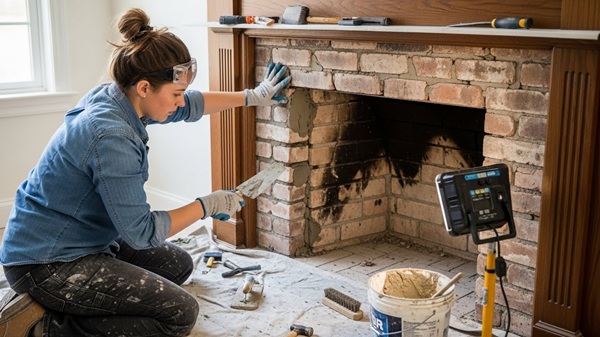
Step 3. Sand & repair the firebox surface
After you have cleaned the area, you will need to sand the bricks.
Make use of sandpaper in the range of 100 to 220 grit. You will need to start with a lower grit first and then move up as you require for smoothening the surface.
In the process, you can either use a sanding block, foam-sanding sponge, or a power sander, which will ensure that you do not hurt your hands.
If you notice any small gaps between bricks in a firebox, be sure to fill and repair them with a refractory caulk (also called fireplace caulk).
This high-temperature sealant is specifically meant for masonry fireplaces, chimineas, and chimneys to withstand fireplace temperatures and thermal expansion.
After you have fixed the cracks and gaps in your firebox and the caulk has cured, sand a bit again to make the surface look even.
Step 4. Prime if needed
Whether the heat-resistant paint you plan to apply inside the fireplace needs a primer depends on the specific product and application.
Many high-temperature paints are self-priming and can be applied directly to a properly prepared bare surface.
However, a high-temperature primer is highly recommended to ensure maximum corrosion protection, optimal adhesion, and durability. A primer helps prevent rust and peeling, especially in demanding conditions.
If you are planning to use a primer before painting, tint the primer as closely as possible to match the final paint color you have chosen.
This applies especially if you are choosing the darker or intense shades to match your décor.
Step 5. Mix the paint and apply it with a brush
When the primer has dried, mix your fireplace paint properly using a paint mixer tool.
For paint application inside the fireplace, you do not need a fancy brush.
An inexpensive nylon brush will work fine, as you can throw it away after you have completed the project.
When applying the paint with a brush, make sure that you clean up the drips immediately with a damp rag or a sponge before they dry. This will help you provide improved final quality without any ugly marks.
Step 6. Let it dry
Allow the paint inside the fireplace to dry completely as per the manufacturer’s instructions, which usually takes 8–24 hours.
Keep in mind that internal fireplace surfaces must be painted thinly, and only one coat will do the job.
Multiple coats are only necessary for bare metal or unsealed masonry, and even then, each coat must be fully cured before applying the next.
7. Cure the paint before use
This step is often forgotten—and that’s where most failures happen.
Heat-resistant paints applied inside the fireplace need a gradual heat cure:
- Start with a low, small fire for about 30 minutes and let it cool.
- Build a medium fire for another 30–45 minutes.
- Finally, resume normal fireplace use.
This controlled thermal cycle helps the coating crosslink properly and prevents future peeling or blistering.
A few precautionary tips you should keep in mind while painting or redoing your fireplace are:
- Choose a specific heatproof formula that matches your surface.
- If the fireplace has metal parts, make sure that it is free from rust, dirt, and grease.
- Use a drop cloth or old cardboard sheets for protecting the areas around the place that you do not want to paint.
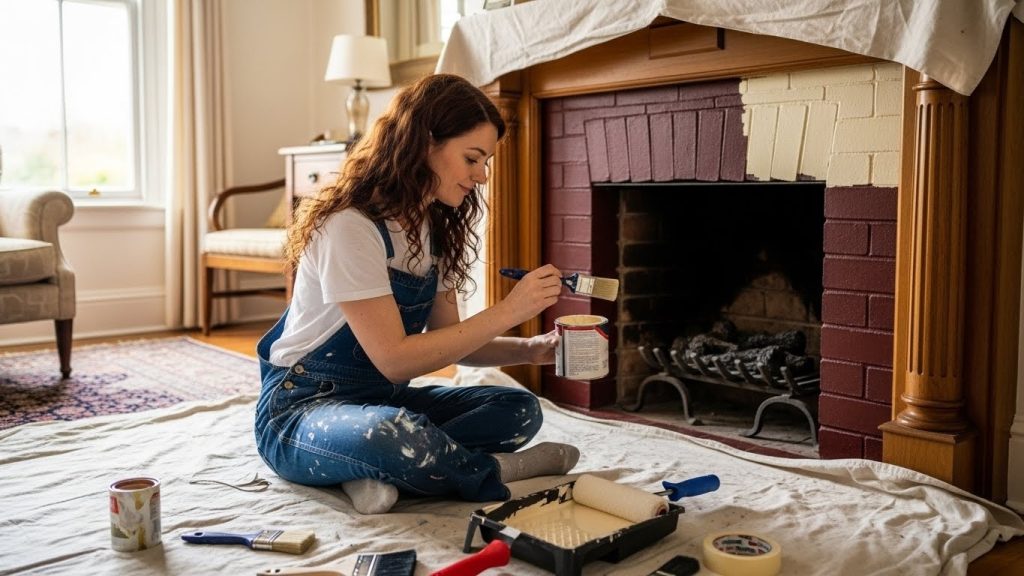
What Color Should You Paint the Fireplace?
A fireplace is a natural focal point, so choosing the right color for it isn’t just about aesthetics—it sets the tone for your entire living space.
It either quietly complements the room or boldly commands attention.
For the inside of the fireplace (firebox)
When it comes to the firebox interior where the fire exactly burns, dark gray and black are the undisputed champions. Simply because:
- They hide soot, ash stains, and inevitable discoloration.
- High-heat paints in black or charcoal tend to age better under repeated thermal cycling.
- Dark shades visually “deepen” the firebox, creating a cleaner and more dramatic backdrop for the flames.
High-heat coatings also look more uniform in darker tones, preventing patchy finishes as they cure.
For the outside—surround, mantel & hearth
Once you move outside the firebox, the design rules shift. This is where you want calm, neutral, room-friendly colors.
Soft, timeless shades work best because they blend with most interior styles and won’t overpower the space. So, you may consider:
- White, off-white, or cream for a fresh, clean look
- Beige or tan for a warm, subtle tone
- Light gray for a modern, understated finish
Neutral colors also make the fireplace feel brighter and larger, especially in rooms with limited natural light.
If you’re painting bricks, opt for light neutral blends to mimic the natural depth of brick while softening the overall appearance. these tones highlight the texture without making the brick look flat or overly “plastic.”
Painted brick can either look stunning or strangely artificial—it depends entirely on color choice.
Fireplace Color Guide by Interior Style
| Style | Recommended Exterior Colors (Surround, Mantel, Hearth) | Firebox Interior Colors |
|---|---|---|
| Modern / Contemporary | Soft gray, cool white, greige, charcoal, deep graphite | Matte black or charcoal |
| Scandinavian / Minimalist | Warm white, cream, light beige, stone gray | Matte black |
| Farmhouse / Cottage | Off-white, chalk white, linen, taupe, warm gray; whitewash brick | Matte black or deep charcoal |
| Traditional / Classic | Cream, ivory, antique white, warm beige, slate gray, navy accents | Black or charcoal |
| Rustic / Country | Terracotta, sandstone, mocha brown, warm charcoal, stone gray | Soot black or charcoal |
| Industrial | Black, iron gray, smoke gray, concrete gray, gunmetal tones | Matte black |
| Mid-Century Modern | Warm white, almond, camel, muted olive, chocolate brown, deep teal accents | Charcoal or black |
| Coastal / Beach House | Bright white, seafoam, pale blue-gray, sand, driftwood gray; light-washed brick | Black or charcoal |

Should You Paint the Mortar Joints on a Brick Fireplace?
Mortar joints are generally the grey-colored concrete joints found between each brick on a fireplace wall with a weathered look.
While many homeowners prefer the timeless, natural look of brick and mortar in a masonry fireplace, others enjoy giving it a stylish upgrade—often by painting the mortar joints for a cleaner, more contemporary finish.
Benefits
One of the main reasons why people like to stain or paint the mortar on the brick fireplace is to match it with the rest of the wall.
Since the masonry stain, paint, or sealant you use will get absorbed into the mortar, it does not fade, crack, or peel away with time. Staining it carefully can even help to hide the repairs by blending it completely with the wall paint colors.
In other words, the painted fireplace mortar will last as long as the mortar itself.
Drawbacks
But here’s the catch: painting mortar joints is both fiddly and time-consuming. These narrow, recessed lines between the bricks demand precision, patience, and a steady hand.
Because the joints sit slightly behind the brick faces, even a small slip can leave paint where you don’t want it—turning a simple update into a detail-oriented mini art project.
Moreover, as the joints are porous in nature, you will need a good amount of time to cure the mortar after applying a coat of paint over it.
Paint Options
The selection of paint for fireplace mortar joints is determined by the area’s heat exposure.
For areas inside the firebox, specialized high-temperature paints with a silicone base are required to withstand extreme heat and maintain finish integrity.
For the exterior surround and brick wall where heat is lower, standard acrylic latex or masonry paints are appropriate after proper preparation.
Options include water-based acrylics for a whitewashed appearance or inorganic silicate paints for moderate heat resistance.
The Step by Step Process
If you really want to paint the mortar joints of a brick firewall in your living area, here are a few essential steps you can follow:
- If the mortar is still new, let it cure for about 3-4 weeks. This will allow proper paint bonding.
- After it’s cured, vacuum or wash away the dust and debris that may have accumulated and dried.
- Let it dry for a day and then apply the primer to the mortar – you can use any universal acrylic primer.
- Let the primer dry for about 4-5 hours, then apply a high quality paint suitable for the mortar.
- Allow the first coat of paint to dry, and then recoat the mortar to get the right finish.
TIP: When applying primer and paint on the mortar joints, make sure you use a thin paintbrush and apply it slowly with smooth, even strokes.

Safety Considerations and Tips to Maintain a Painted Fireplace
Painting a fireplace may make it look fresh and modern, but keeping it that way—and keeping yourself safe in the process—requires a bit more than just admiring your handiwork from the couch.
A fireplace is, after all, a controlled combustion chamber in the middle of your living room, not a decorative shelf you can dust once a month.
The good news is that with a few smart safety habits and some simple maintenance, your newly painted fireplace can stay sharp, durable, and ready for many cozy evenings ahead.
1. Clean soot regularly
If you use your wood stove regularly, then you will have to deal with the soot and ashes.
To keep the fireplace looking neat, you can clean the ash out after every two or three burnings.
Then, as the spring arrives and you no longer use the fireplace, clean out the soot using a stiff nylon brush or vacuum with a HEPA attachment to remove loose soot.
2. Avoid burning resinous or “wet” wood
Softwoods like pine, or wood that isn’t fully seasoned, create excess creosote and soot. This accelerates discoloration and forces more frequent cleaning. Choose dry hardwoods for cleaner burns and a longer-lasting painted interior.
3. Inspect for damage every season
Before your first winter fire, check for cracks in masonry, peeling paint, or gaps around mortar joints. Early fixes—using masonry patch, refractory mortar, or touch-up paint—prevent bigger issues later.
Never use aerosol cleaners, polishes, or flammable solvents inside the firebox. Stick to fireplace-safe masonry cleaners and vacuum tools for maintenance.
Also, the rear wall and firebox floor get the hottest. You should expect natural wear here, so an annual light touch-up keeps things looking consistent and helps protect the masonry.
Related FAQs
Can I use spray paint inside a fireplace?
You should not use regular spray paint inside a fireplace because most aerosol paints cannot withstand high temperatures and will peel, blister, or emit toxic fumes when exposed to heat.
If you prefer a spray application, only use high-heat spray paint specifically rated for 1,200°F or more, and ensure the product is designed for direct firebox use (many high-heat sprays are meant only for grill exteriors, not open flames).
Always clean thoroughly, apply thin coats, and allow proper curing before lighting a fire.
How long does paint inside the fireplace last?
High-heat paint inside a fireplace typically lasts 3 to 5 years, depending on how often you use your fireplace and how well you maintain it.
Surfaces exposed to the highest heat—like the firebox back wall—may show wear sooner, while lightly used fireplaces can go longer between touch-ups.
Proper surface preparation, thin coats, and a controlled heat-curing process significantly extend durability. Burning clean, seasoned hardwood and reducing soot buildup also helps the painted interior stay intact and looking fresh.
Can you use chalk paint on a marble fireplace?
Since chalk paint is not flammable, a water-based variety, you can use it to refinish your fireplace. This chalky matte finish paint is safe for painting fire surrounds, hearths, and radiators without the need for any sanding, stripping, or priming.
This means if your fireplace is already clean (or you just require a quick clean-up for your marble fireplace), you can use chalk paint to offer it a quick makeover. It sticks very easily to the surface and gives excellent coverage.
Plus, if you seal the chalk paint correctly, it lasts for a long time without any damage.
But be aware that these are not classified as heat-resistant or fire-retardant paints, so it’s not the best option for painting the fireplace inside.
What are the other safe alternatives to painting my fireplace?
If painting isn’t your style, there are several safe and attractive alternatives. You can whitewash or limewash the brick to soften its look while keeping the natural texture visible.
The specially formulated Romabio’s Classico Limewash paint for fireplace bricks can be a great alternative if you want to create an antique limewash or whitewashed look.
Staining is another option—it enhances color without creating a solid painted surface.
For a bigger refresh, add tile, stone veneer, or heat-resistant panels around the surround. Inside the firebox, many homeowners choose ceramic firebrick liners or cast refractory panels for a clean, long-lasting finish without using paint.
The Bottom Line
If you’ve ever looked inside your fireplace and thought, “This could use a makeover,” you’re not wrong—but you also can’t just grab any old paint can and get to work.
The inside of a fireplace is a zone where temperatures soar, soot settles like it pays rent, and ordinary paint simply gives up and flakes away.
Choosing the right coating isn’t just a design decision—it’s a safety requirement. In high-heat spaces like a firebox, only specially engineered paints can survive the extreme conditions without emitting fumes or failing under stress.
Just remember to clean the fireplace thoroughly first, and then you can start to paint.
Share the post "What Kind of Paint to Use Inside a Fireplace?"


With Radon warnings and sealers out there, it can send your head into a spin about whether this is all Read more

We all love MDF for our various projects, including furniture and cabinets. After all, it's cost-effective compared to other wood Read more

For those who want their walls to have a unique appearance, glow-in-the-dark paint is one way to express creativity. As Read more

For over two hundred years, the Valspar brand has been associated with quality. Starting in 1806, the company grew into Read more

Jack Luis is a semi-retired painter who loved painting his clients’ ideas on their walls.
He had worked as a painter for over a decade serving customers in areas such as Charleston, Mount Pleasant, Beaufort, and Georgetown, SC (South Carolina). Today in his free time, he likes to read and write about the newer techniques implemented in his profession. You may read more about him here or get in touch with him here.