
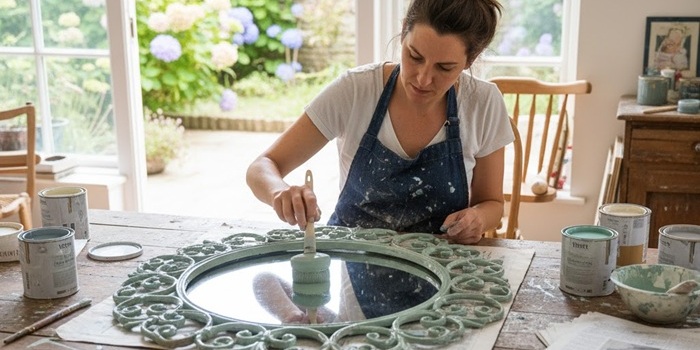
For those who want to give their antique projects (like an old metal mirror frame) a simple, stressed appearance without actually putting the item under stress, chalk paint is the answer.
Whether your frame looks a little tired, a little too shiny, or simply stuck in another decade, a few strokes of this versatile paint can turn it into a statement piece. It’s a specialized mixture that creates a chalky appearance on surfaces after it has dried.
However, knowing how to apply the chalk paint to metal surfaces properly can enhance the vintage look you’re aiming for.
In this guide, I’ll walk you through the steps to successfully paint your antique metallic mirror frame with chalk-style paint, ensuring a professional-looking aged appearance with minimal effort.
Ready to turn that forgotten frame into something worth a double-take? Let’s begin.
How to Chalk Paint a Metal Mirror Frame?
You probably have seen plenty of examples of chalk finish paint, but it may not be quite what you think. The key to refinishing your antique metal mirror frame correctly is thorough preparation and careful application.
To get started, you will need the following items…
- Painter’s tape
- Old newspapers
- A soft, damp cloth
- Soft-bristled brush
- 60-grit sandpaper
- Chalk finish paint
- Sprayer machine
Step 1- Clean the frame
When you have gathered all your supplies, start by giving the old metal frame (whether it’s gold, silver, copper, bronze, or brass) a proper refresh.
You need to be thorough with cleaning, but remember that you are only getting rid of loose debris, dirt, grime, and fingerprints that might keep the paint from sticking. Your mission isn’t to strip the finish.
So, use a soft, damp cloth or sponge to gently wipe down the surface. For frames with ornate details or carved patterns, switch to a soft-bristle brush to reach into those tight crevices.
Do not use any harsh chemicals or soak the frame in water. Also, avoid overscrubbing as it can damage the metal finish on the frame.
Step 2- Use painter’s tape and newspapers
Next, it’s time to protect your shiny mirror. For this, use the painter’s tape where the mirror meets the frame.
The tape should go on the mirror itself to protect it from the paint, so you’ll want to get as close to the edge as possible without leaving the mirror itself exposed.
That way, you will ensure that you get a clean edge when using the spray paint on the frame.
It also helps if you add a few layers of newspaper on top of the mirror. Cover the entire surface and tape down the newspaper to keep it in place so that the paint will not get through.
Remember that you have taped the edges, but the newspapers should cover part of that, along with the rest of the mirror, just to prevent any accidents from occurring.
Step 3- Apply the chalk paint using a sprayer
You could use standard chalk paint and a brush, but given how small a surface mirror frames usually are, a quick sprayer application works just as well and is much faster.
That said, your choice of using a sprayer or a brush to paint metal with chalk paint should depend on the finish you want.
You should use a sprayer if you prefer a smooth, flawless, factory-style finish with zero brush strokes. It’s great for sleek metal frames and saves time on detailed designs. However, it requires masking the mirror carefully and doing the job in a well-ventilated area.
However, if you want more control, a hand-crafted look, or a slightly textured, vintage effect, I recommend using a brush instead. Chalk paint applies very well with a good-quality synthetic or natural-bristle brush, especially on intricate designs.
If you plan to use a spray gun, prepare your water-based chalk paint by thinning the paint for the sprayer. Then, after checking the consistency you desire to achieve, spray two to three coats of paint with the sprayer.
If it still does not look quite right, you can always add another coat of paint. But do not overdo it; otherwise, you might have drip marks on the outside of the frame.
Step 4- Let the frame dry & sand lightly
Let the mirror frame sit overnight to fully dry. Once it has dried, you can choose to leave the frame looking rough or make it appear newer (by smoothening out the paint) if you desire.
To achieve a naturally distressed look that gives the metal frame a subtle vintage charm, use the 60-grit sandpaper to scrub a little of the paint off the corners and along the edges where it may have gathered.
Focus on areas that would naturally show signs of wear over time, such as edges and raised details. Do not scrub hard. Instead, use light, controlled strokes.
Once you’re satisfied with the look, wipe the frame with a clean cloth to remove the sanded dust.
Step 5- Take off the newspaper and seal
Now, when you are done with applying chalk paint to your metal mirror frame, it’s time to remove the taping and newspaper (remember you have covered your frame with).
Just peel them away slowly so you do not remove any of the paint near the edges.
Finally, if you wish, you can finish the chalk paint with a protective wax or sealant to ensure durability and a beautiful, long-lasting finish. A clear wax will preserve the matte chalky finish and give the frame a soft, velvety texture, while also protecting the paint from scratches and wear.
However, this step is completely optional and depends on the look and level of protection you want on your metal mirror frame.
Best Chalk Paint to Use for Metal Mirror Frame
Although it is Annie Sloan who was the creator of the paint and offers what you need, you can get chalk paint from several different sources.
The Behr’s Chalk Collection and Rust-Oleum’s Chalked Line are two, but you can also go to Home Depot, which makes its own brand of chalk paint.
You can find many different hues in the chalk paint that they provide. Or, if a Lowe’s is near your location, you can purchase their brand of chalk paint that can be tinted for over 40 different color options.
Magnolia Home is another source as they emphasize the farmhouse look.
If you are on a budget or want to try DIY ways, you can also try DIY chalk paint recipes at home.
Whichever chalk paint you pick, do not forget to include the right tools, brushes, and waxes to apply and bring out the best finish in the chalk-painted metal.
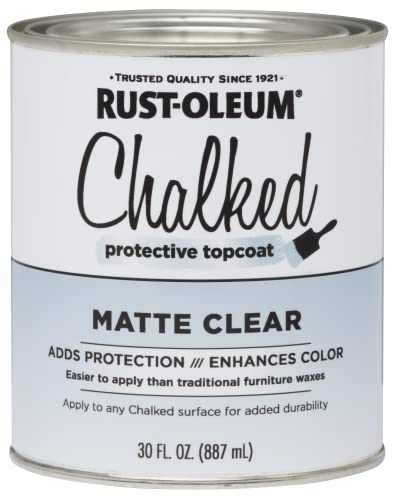
- Use on a variety of interior surfaces like wood, metal, ceramic,...
- Low-odor/VOC formula allows for easy clean up with soap and water
- Dries to the touch in just 30 minutes and covers up to 150 sq. ft.;...
*Last update on 2026-03-30 / Affiliate links / Images from Amazon Product Advertising API
Pros and Cons of Chalk Painting an Old Metal Frame
Arguably, the best reason to use white water-based chalk paint on your old metal frame or metal furniture is that it’s easy to use and simple to clean.
A few other advantages of chalk painting metal are:
- When rightly applied to the item, it creates a stylish vintage appearance in a short period.
- Because chalk paint is so thick, it can often be applied in one coat, although two coats are still recommended.
- Chalk paint usually skips the primer application thanks to its strong adhesion. But using one can help when you’re painting a dark surface with a light shade, covering stains, or working on something extra slick or uneven.
Using chalk paint on metal also avoids having to sand away the original paint from the surface.
While you might sand away rough areas or excess amounts of paint, you do not have to remove all the old paint from the mirror frame to apply the chalk finish paint. In fact, the matte finish of the chalk paint looks better when applied on a surface that has old paint on it.
Of course, if you want a smooth appearance to the chalk paint, then sanding is recommended. But keep it light so you do not ruin any of the details that often accompany old or antique mirror frames. That way, you preserve its appearance while adding a new feature.
The negatives of using chalk paint finishes for metal surfaces:
While chalk paint offers many advantages, there are some potential drawbacks to consider before you pick this option:
- It typically comes with a limited color palette.
- It can sometimes leave visible brush strokes if not applied carefully.
- Since it is water-based, it’s more susceptible to staining and harder to clean without a protective topcoat.

Which Types of Metal Surfaces Can You Apply Chalk Paint To?
Chalk paint works well on most indoor metals—whether copper, bronze, brass, or even gold, silver silver-plated—as long as they’re low-traffic pieces.
Decorative items like vases, picture frames, or ornate mirror frames handle chalk paint beautifully and can keep their finish for 3–5 years.
However, high-traffic indoor metals such as kitchen cabinet hardware and fixtures, or frequently handled furniture, aren’t ideal, since unsealed chalk paint wears off within a year.
Chalk paint also stays well on decorative silverware like trays, platters, and display pieces when the surface is prepped and properly sealed. But it’s not suitable for eating utensils made of silver as the finish isn’t truly food-safe, and it can’t handle constant washing or daily wear without breaking down.
Can you use chalk paint on outdoor metal?
For outdoor metals like lawn furniture or benches, chalk paint isn’t recommended. Its matte formula lacks protective additives, so weather, moisture, and sunlight can strip it quickly unless you apply a waterproof or water-resistant sealer to it.
One other main drawback of applying chalk paints to outdoor metal antiques and furniture is that they can lose their novelty very quickly, especially when the chalk-painted surface is exposed to dirt or grime. You will then be left with all the messy-looking appearance that you want to get removed and repainted.
Moreover, it’s often advertised as a no-prep, fast-drying, and inexpensive paint. However, chalk paint on metal surfaces may require multiple coats to achieve the desired adhesion and coverage. And applying wax or topcoat adds additional time and cost to the process.

How to Remove Chalk Paint and the Wax Coating Off Metal Surface?
Chalk painted and finished your mirror frame, the way you don’t like?
Worry not! There are ways by which you can remove chalk paint and wax coating from any piece without regretting it.
I have made mistakes many times and then removed the coating later using these chalk paint removal techniques. Hopefully, you will also find them useful…
1- Homemade Removers
Removing the chalk paint and wax coating with a DIY homemade remover solvent is my top favorite.
Since chalk paint is water-based and isn’t very stubborn, you don’t actually need chemical-based solvents to remove it from the metal surface. Here are a few household ingredients and options you can try:
- Mix soap in warm water then rub the paint off slowly
- If the paint remains, mix some vinegar with water, heat it, and then apply it to the surface
- Let the solution sit there for some time and then rub the paint off with a damp cotton cloth.
Besides soapy water and vinegar, you can also use washing soda, acetone, denatured alcohol, and mineral spirits as an alternative to wash off the chalk paint.
Plus, there are ready-made sprays on the market designed to soften and remove the chalk paint by just wiping them off the surface. These can work too.
2- Using Paint Strippers
If you find that the paint is bonded with the metal surface very well and the homemade solutions do not work, you can use these chemical-based paint strippers.
These paint strippers are also good for rubbing the paint off metal frames that have detailed patterns and grooves.
But remember, most of these are industrial-grade solvents that may be dangerous to work with. So, you will need to use them safely with proper protection like gloves, goggles, face masks, and long-sleeved clothing.
To use these chalk paint strippers, follow these steps:
- Apply the paint stripper on the surface painted with chalk paint
- Wait for the time as indicated in the instruction manual of the stripper
- In about 20-30 minutes, you will see the chalk paint bubbling/softening up
- Use a wire scrapper, putty knife, or a 5-in-1 painter’s tool to remove the paint off
3- Sanding the Chalk Paint Off
Be aware that sanding the chalk paint and the wax coating off can affect the overall finish of the metal surface. So it should be your last resort if all the above methods fail.
If it’s a classic treasured metal frame, for example, you are sanding the paint off it can remove the natural finish. To avoid this problem, it’s better to use fine-grit sandpaper to manually remove the paint, rather than using an electric sander.
Related FAQs:
Does chalk paint adhere to smooth metal, glass, or mirror?
Chalk paint will adhere to smooth metal, glass, or mirror surfaces, but only with proper prep. These materials are non-porous, so the paint can’t grip well on its own.
Clean the surface thoroughly, repair dents or cracks with metal filler, and lightly sand if needed.
For best results, apply a stain-blocking primer first—it creates a textured base that helps the paint bond, hides imperfections, and prevents moisture issues. With these steps, chalk paint sticks much more reliably.
How long does chalk paint take to dry on metal surfaces?
Chalk paint typically dries to the touch on metal in about 30 minutes and fully cures in roughly 24 hours. Drying speed depends on humidity, temperature, and how thick each coat is.
Since metal is non-porous, the water in the paint evaporates quickly instead of soaking into the surface, helping it dry faster.
However, curing still takes time, so avoid handling, sealing, or adding stress to the finish until the full 24-hour curing period has passed for best durability.
Can you use a paintbrush or a roller for chalk painting metal?
Yes, you can use either a brush or a roller for chalk paint instead of a sprayer. A natural-bristle brush works well for control, intricate details, and achieving a soft, hand-painted look without harsh streaks.
For smoother, more uniform coverage, a high-density foam mini roller is ideal—especially on medium or larger frames.
Many DIYers combine both methods: apply the first coat with a brush to reach all angles, then follow with a second coat using a foam roller for a cleaner, softer, stroke-free finish.
The Bottom Line
Giving an old metal a fresh identity is surprisingly easier than most DIY legends suggest—and chalk paint is the secret weapon.
If you want to go with a minimalist or bohemian appearance on your old mirror frames, you may want to consider water-based chalk paint. Unlike acrylic, latex, and alkyd oil paint, it’s simple, fun, and easy to do a quick makeover. Just choose the right wax or sealant to protect the paint and give the piece a long-lasting finish.
By following the steps outlined in this guide, you can achieve a beautiful, customized finish that enhances your home décor. This DIY process not only allows for creative expression but also fosters a sense of accomplishment as you transform something old into a stunning centerpiece.
Share the post "How to Update an Old Metal Mirror Frame with Chalk Paint?"


Your basement is the perfect spot for building rooms you may not want in the main house. These may include Read more

Drywall is basically a panel composed of calcium sulfate dihydrate or gypsum. Other names include plasterboard, wallboard, sheetrock, gypsum board, Read more

Repainting the wooden window frames of your house is like putting on a nice, new summer dress after a long, Read more

While brushes and rollers are the traditional means of painting walls, spray paint is coming more in favor. For many Read more

Jack Luis is a semi-retired painter who loved painting his clients’ ideas on their walls.
He had worked as a painter for over a decade serving customers in areas such as Charleston, Mount Pleasant, Beaufort, and Georgetown, SC (South Carolina). Today in his free time, he likes to read and write about the newer techniques implemented in his profession. You may read more about him here or get in touch with him here.