

When it comes to surface preparation in metal fabrication, automotive restoration, construction, and industrial maintenance, few processes are as essential—or as commonly misunderstood—as shot blasting and grit blasting.
Both techniques use high-velocity media to clean, strengthen, or texture a surface, yet they deliver noticeably different results.
Whether you’re preparing structural steel for coating, refurbishing machinery, or ensuring compliance with strict SSPC/NACE standards, knowing the difference between these two blasting methods can save you time, money, and rework.
In this guide, I will try to break down how each process works, where they excel, and how to choose the right one for your next project.
What is Shot Blasting – What it is Used for?
Shot blasting is a mechanical surface preparation process that uses high-velocity spherical media—called shots—to clean, strengthen, or polish metal surfaces.
These shots are typically made of steel, stainless steel, or ceramic, and are propelled using a turbine wheel blast system, not compressed air.
In shot blasting, the spinning wheel accelerates the shots and directs them onto the surface, removing scale, rust, paint, and other contaminants. The impact also imparts compressive stress, which enhances the metal’s fatigue strength and surface durability.
This method is ideal for large production environments such as foundries, automotive plants, shipyards, and fabrication shops where speed, consistency, and surface profile control are essential.
What is shot blasting used for?
Shot blasting is commonly used to clean metal surfaces in preparation for painting or other surface treatments, especially when the surface is very large and difficult to prepare.
These types of surfaces will ideally need a stronger application force (applied by a shot blaster) along with denser media materials for preparation.
The shot blasting centrifugal abrasion treatment is also sometimes required to create a particular finish on metal surfaces that need to be used in large-scale production.
For example, a rough, textured finish is often required on handrails or other objects that will be handled frequently, as a smooth finish can become slippery when wet.
Another example of this might be creating a textured surface on a metal sheet that needs to be used for anti-slip flooring.
Shot blasting can also be used to remove rust or other rough surface contaminants from metal surfaces like car and truck frames that need to be restored or the steel containers that are being recycled.
When conducted properly, shot blasting is an efficient way to remove these types of contaminants without causing any damage to the metal surface beneath.
What is Grit Blasting – Common Uses and How it’s Different?
Grit blasting is an abrasive cleaning and surface preparation process that uses angular, sharp-edged particles—known as grit—propelled at high speed, typically through compressed air.
Unlike shot blasting, which uses round media and a turbine wheel, grit blasting relies on abrasive particles such as aluminum oxide, garnet, silica alternatives, crushed glass, or steel grit to cut into the surface and create a rougher profile.
Common uses of grit blasting
Grit blasting is highly versatile and is widely used for:
- Removing rust, old coatings, and heavy contaminants
- Creating an anchor profile for paint, powder coating, or industrial coatings
- Preparing concrete surfaces for bonding or resurfacing
- Precision cleaning of small parts, tools, and intricate metal components
- Restoration work in automotive, marine, and construction sectors
The angular shape of grit makes it more aggressive, producing a sharper and deeper surface profile compared to shot blasting.
How is grit blasting different from shot blasting?
The key differences include:
- Media Shape: Grit is angular and cuts into the surface; shots are round and peen the surface.
- Equipment Type: Grit blasting uses compressed air systems; shot blasting uses turbine wheel machines.
- Surface Finish: Grit blasting creates a rough, textured profile ideal for coating adhesion; shot blasting produces a smoother, hammered finish.
- Applications: Grit blasting suits detailed, precision cleaning and coating prep; shot blasting is preferred for large-scale, high-production environments.
In short, grit blasting focuses on cutting and profiling, while shot blasting focuses on cleaning and strengthening—making each method uniquely valuable depending on the project’s goals.
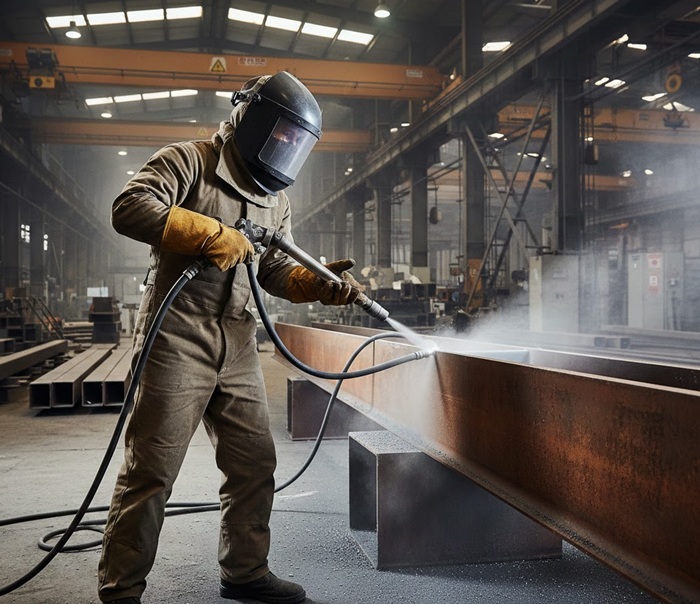
Difference Between Shot Blasting, Grit Blasting, and Sandblasting
Shot blasting, grit blasting, and sandblasting all fall under abrasive blasting, but they differ in media, equipment, and the finish they produce.
Shot blasting uses round steel or ceramic shots propelled by a high-speed turbine wheel, making it ideal for heavy-duty cleaning, descaling, and strengthening metal surfaces through a peening action.
It delivers a smoother, more uniform finish and is commonly used in large industrial operations like foundries and fabrication plants.
Grit blasting, on the other hand, uses sharp, angular abrasives—such as garnet or aluminum oxide—driven by compressed air.
This method cuts into the surface, creating a deeper, rougher profile perfect for paint and coating adhesion.
Sandblasting traditionally meant blasting with silica sand, but due to health hazards, it’s now mostly a general term for any air-driven abrasive blasting.
In practice, grit blasting and sandblasting are similar, but shot blasting remains distinctly different because of its spherical media and turbine-based system.
Here’s a clearer breakdown in a table format:
| Process | Media | Surface Result | Main Use |
|---|---|---|---|
| Shot Blasting | Round steel/ceramic shots | Uses Turbine wheel and delivers smooth, peened surface | Heavy-duty cleaning & strengthening |
| Grit Blasting | Angular abrasives | Uses Compressed air and Results are Rough, sharp profile | Coating prep & rust removal |
| Sandblasting | Traditionally sand | Uses Compressed air and Results Varies | Light cleaning or general term for abrasive blasting |
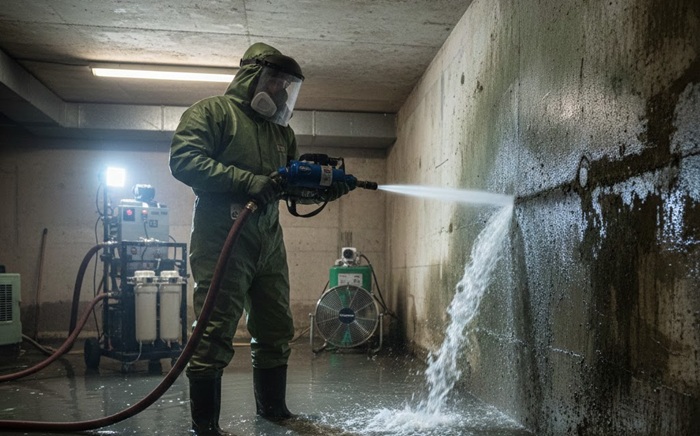
Other Types of Abrasive Blasting Methods Used for Surface Preparation
Besides shot blasting, grit blasting, and sandblasting, several other abrasive blasting techniques are used across industries for cleaning, restoring, and preparing surfaces.
While these methods are not as widely used as the primary blasting types, each serves a specific purpose—often where precision, reduced dust, or gentle cleaning is required.
Some of the most notable alternative blasting methods include:
Wet Blasting
Wet blasting combines water with abrasive media to reduce dust, static charge, and heat generation.
This makes it ideal for environments where dust control is critical, such as automotive refinishing, mold remediation, and sensitive industrial settings.
The water cushions the abrasive impact, making the finish smoother than dry blasting.
Bristle Blasting
Instead of media, bristle blasting uses a rotating brush made of steel bristles that strike the surface with high kinetic energy.
It removes rust, patina, scale, and coatings while simultaneously producing an anchor profile.
This method is commonly used for pipeline maintenance, weld cleaning, and corrosion removal without requiring loose media.
Dry-Ice Blasting
Dry-ice blasting uses solid CO₂ pellets that sublimate on impact, lifting dirt and contaminants without leaving secondary waste.
Since the pellets evaporate instantly, it’s perfect for cleaning electrical components, food processing equipment, engines, and machinery where water or grit cannot be used.
Vacuum Blasting
Vacuum blasting (or dustless blasting) combines blasting and suction in a closed-loop system. As the abrasive hits the surface, the used media and debris are immediately collected.
This method is ideal for indoor work, confined spaces, and situations requiring minimal cleanup or environmental containment.
Pencil Blasting (Micro-Blasting)
Pencil blasting uses extremely fine abrasive material delivered through a narrow nozzle to achieve high-precision cleaning.
It’s commonly used in electronics, jewelry making, aerospace component detailing, and delicate restoration work where tight control and minimal surface disturbance are required.
Centrifugal Blasting (Wheel Blasting)
Centrifugal blasting is similar to shot blasting but can use various types of media. A high-speed rotating wheel accelerates the abrasive, eliminating the need for compressed air.
It’s best suited for large-scale, continuous production environments—such as cleaning castings, preparing structural steel, and treating large metal surfaces efficiently.
All these specialty blasting techniques fill gaps where traditional abrasive blasting methods may be too aggressive, messy, or imprecise, allowing industries to choose the right process for the specific material, environment, and desired surface finish.
The Bottom Line
Shot blasting and grit blasting may seem similar, but they serve different purposes based on the media used, the equipment involved, and the finish required.
Shot blasting uses round steel or ceramic shots propelled by a turbine wheel, delivering fast, uniform cleaning and a smoother, peened surface—perfect for large-scale industrial work and strengthening metal components.
Grit blasting, on the other hand, relies on angular abrasives driven by compressed air to cut into the surface and create a sharp profile ideal for paint, coating, and rust removal.
If you have questions about exactly what system to choose or need help choosing the right surface preparation equipment, it’s good to get in touch with experts and professionals. They can help and guide you in making the best choices for your specific application needs.
Share the post "Shot Blasting vs. Grit Blasting – What is the Difference?"


From building furniture and refurbishing existing furnishings to touching up the doors, tables, and other wooden pieces in your home, Read more

Getting the best paint job means more than using the right paint. In addition to having good brushes and rollers, Read more

You are in the middle of sanding your walls, and you realize that there are still many more pieces of Read more

I remember the early days when my father, as a painter, did not have many options for spraying the cabinets Read more

Jack Luis is a semi-retired painter who loved painting his clients’ ideas on their walls.
He had worked as a painter for over a decade serving customers in areas such as Charleston, Mount Pleasant, Beaufort, and Georgetown, SC (South Carolina). Today in his free time, he likes to read and write about the newer techniques implemented in his profession. You may read more about him here or get in touch with him here.